
Schedule a Free Consultation  972-905-2170

What Evidence Do You Need for an I-130 Family Petition?
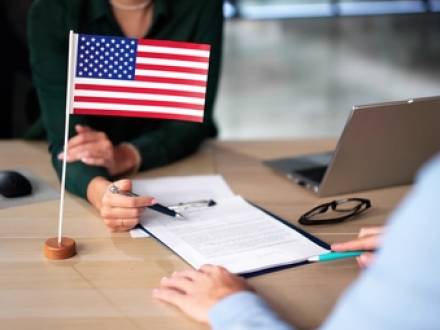 When you file Form I-130, you need to prove that you are a U.S. citizen or lawful permanent resident who is allowed to file for the relative, and that you have the family relationship you claim. If you are filing for a spouse, you must also provide evidence that you entered into the marriage in good faith and not only to obtain an immigration benefit.
If you are preparing a petition in 2026, a Dallas, TX family-based immigration lawyer can review your documents before you submit them to U.S. Citizenship and Immigration Services (USCIS).
What Does the USCIS Review Process for an I-130 Petition Look Like?
Under 8 U.S.C. § 1154, USCIS reviews the facts and documents you submit before deciding whether to approve the petition. They want to ensure you are allowed to file for the relative and that your relationship fits one of the family categories recognized by immigration law. For example, U.S. citizens can file for certain spouses, children, parents, and siblings, while lawful permanent residents can file for certain spouses and unmarried children.
An approved I-130 does not give your relative a green card or permission to live in the United States. It confirms that USCIS recognizes the family relationship for immigration purposes. If your relative is in a family preference category, the date USCIS received your petition can also determine their place in line for an available immigrant visa. Immediate relatives of U.S. citizens, including spouses, unmarried children under 21, and parents, are not subject to yearly visa limits.
What Documents Prove a Family Relationship for an I-130?
You also have to prove exactly how you are related to the person you are filing for. The documents depend on the type of relationship:
- If you are filing for your spouse, submit your marriage certificate. If either of you was married before, also include proof that each earlier marriage legally ended through divorce, annulment, or death.
- If you are filing for your child, you will usually need the child's birth certificate showing you as a parent.
- If you are filing for a parent, you will usually need your own birth certificate showing that person as your parent.
- If you are filing for a sibling, you generally need birth certificates showing that you share at least one parent.
- If the relationship is through a stepparent or stepchild, you must show that the marriage creating that relationship happened before the child turned 18.
- If the relationship is through adoption, you need the adoption decree and proof that the adoption met the age, custody, and residence rules that apply under immigration law.
Some parent-child cases require extra evidence. For example, USCIS may ask for more proof when the relationship involves a father and a child born outside marriage, a stepparent, or an adopted child.
Submit copies unless USCIS specifically asks you to send an original.
Proving Your Citizenship or Residency
Proving that you’re a citizen or permanent resident is straightforward. A U.S. citizen can use a birth certificate, U.S. passport, Certificate of Naturalization, Certificate of Citizenship, or Consular Report of Birth Abroad. A lawful permanent resident can submit a copy of the front and back of the green card.
If your current name is different from the name on those documents, include proof of the change, such as a marriage certificate, divorce decree, or court order.
How Do You Prove a Marriage Is Real for an I-130?
If you are filing for your spouse, USCIS also wants evidence that you entered the marriage because you intended to build a life together. Helpful evidence can include:
- A joint lease, mortgage, or deed
- Joint bank accounts, credit cards, or loans
- Joint tax returns
- Insurance policies listing each other as spouses or beneficiaries
- Birth certificates for children you have together
- Photos from different times in your relationship
- Travel records showing trips you took together
- Written statements from people who personally know both of you
Evidence is stronger when it shows that you actually share parts of your life, such as a home, money, bills, insurance, travel, or family responsibilities. Records that cover different points in the relationship can be especially useful because they show that the marriage has continued over time. If you recently married and do not yet have years of joint records, that does not necessarily hurt your case.
Schedule a Free Consultation With Our Plano, TX Immigration Attorney
Attorney Jae Lee works with clients directly, one-on-one, rather than handing your case off to staff. His own parents went through the immigration process, so the waiting, the paperwork, and the worry that comes with a family being split across borders are familiar to him personally. He also works with clients remotely.
Contact the Law Office of Jae Lee at 214-799-5062 to talk to our Dallas, TX family-based immigration lawyer today.


From our offices in Dallas and Plano, Texas, we serve clients throughout the surrounding areas including Fort Worth, Irving, Arlington, Farmers Branch, Frisco, Carrollton, Garland, Addison, Richardson, Allen, Murphy, Wylie, McKinney, Dallas County, Collin County, Denton County, and all of Northeastern Texas.
Results listed are not a guarantee or indication of future case results.
Contact Our Firm
 The use of the Internet or this form for communication with the firm or any individual member of the firm does not establish an attorney-client relationship. Confidential or time-sensitive information should not be sent through this form.
I have read and understand the Disclaimer and Privacy Policy.